Showing posts with label Europe. Show all posts

Wednesday, 27 February 2019

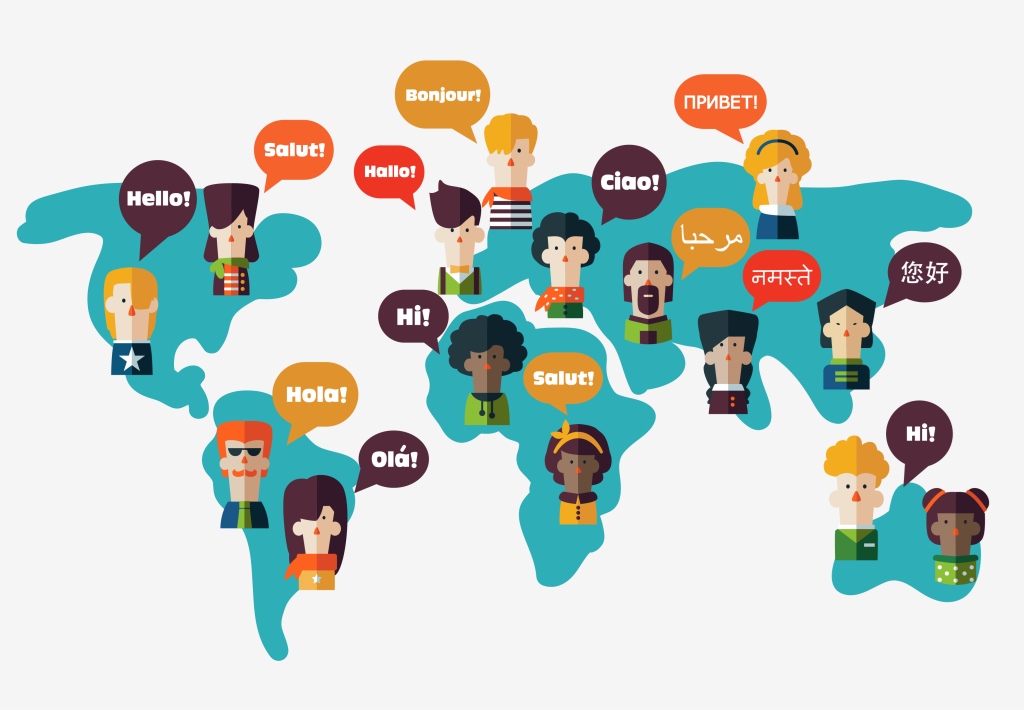
I am a Rock: Why are the British so bad at languages?


I try very hard to be an optimist and I genuinely think that in many - indeed in most - ways, the world has become a significantly better place over my lifetime. However, there is always stuff going on to counter that rose-tinted view of the world, both in my own life and in the wider world, and just occasionally things crop up which make me succumb to feelings of doom and gloom.

One such thing greeted me in this morning’s news (February 27th 2019), with the not exactly surprising revelation that language learning here in the UK appears to be in meteoric decline, according to a survey by BBC news. The story is here:


For a linguist it makes depressing reading, and it is difficult to resist the temptation to link this apparent decline in our willingness as a nation to engage with the language and culture of other countries as symptomatic of the same narrow-minded insularity that drove a (very slim) majority of Britons to vote to leave the EU back in 2016.

As a retired languages teacher, I am relieved to say that this is now for me just a subject of deep concern, rather than one of professional survival, but that doesn’t mean to say that I am not very sad to see it happening. We Brits have always been bad at it, but why are we getting worse at learning languages? And why are we not more worried about it? In short, why are we so arrogant?

When I graduated and came into language teaching in the early 80s, the future for language learning looked bright. We were relatively new members of the EU, and as a nation we were rapidly becoming more familiar with our European neighbours thanks to easier communications, the boom in foreign holidays, growth in trade and a love affair with cuisine more interesting than the “boiled beef and carrots” on which our parents’ generation had been raised. It’s very hard to believe now, but pizza and pasta were exotic rarities as recently as the 1970s, whilst wine was a drink for the well-to-do or for special occasions, and baguettes, croissants and quiche were words encountered only in French lessons at school. Languages were valued and booming in schools, and a move away from élitist grammar-based teaching, with more emphasis on practical communication skills - listening and speaking - promised a bright future for the subject.

That’s the way it was in the first 25 years of my teaching career: modern languages (in the case of my school French and German) were part of the core curriculum alongside Maths English and the sciences and whilst some didn’t like them and weren’t very good at them, there was a feeling that, like Maths, language learning was somehow “good for you”. For me, a pragmatic and good-humoured approach to teaching, combined with giving pupils the opportunities for fun trips to foreign parts, made it relatively easy, and certainly enjoyable, to teach languages.

In my small school, with around 100 in each year group, all pupils took GCSE French or German, and A-Level entries of between 10 and 20 for my main language, French were the norm as recently as the early 2000s, with many of these going on to read the subject at university.

So what has gone so badly wrong with language learning, and in such a short time? These days, taking a language to GCSE has become just an option, taken up by just a few keenies, and as a result, A-Level language teachers in many schools and colleges often struggle to recruit more than a handful of candidates, with formerly mainstream languages like German having become the preserve of a tiny minority, as confirmed in today’s news report.

Part of the answer lies in a perfectly laudable broadening of the curriculum over recent decades: more apparently attractive, relevant and  - dare I say - easier subjects like Business Studies, Psychology, Photography, Physical Education and Media Studies have all proved to be an irresistible temptation to pupils burdened with a “must pass” core of English, Maths and the sciences. Moreover, some very poor choices made by the exam boards who devise specifications at GCSE and A-Level have served to make languages statistically a very risky choice for pupils, with top grades elusive. This, combined with schools leaders’ nervous pursuit of league table success has led to a “perfect storm” for languages in schools.

This is very, very sad, and in my opinion very damaging to our long-term success and well-being as a society, at two distinct levels:

The first is self-evident and practical: our unwillingness to engage with the language and culture of other countries is deeply harmful to trade and business. We hide behind the excuse that “everybody speaks English”, failing to realise that the wheels of commerce are driven by human interaction and good manners, which often amount to no more than making an effort to meet others halfway. Yes, the detailed negotiations for that lucrative contract may be carried out in English, but the small-talk and goodwill that underpin it may be immeasurably strengthened by a simple greeting in the language of the host, or maybe a “please” and a “thank you” at mealtimes or a comment about the weather. It’s amazing how much ice can be broken by trying to use just a bit of school-level language.

And please don’t tell me that speaking another language is difficult: much of the rest of the world is bilingual, and we are reminded all the time by the many lovely and capable people from across Europe who have in recent years come to live and work in our country how easy it is to become fluent in English, one of the subtlest, richest and most illogical of all languages. We all meet them every day: think of that every time you are served in a restaurant or a coffee shop, helped recover from illness by a doctor or nurse in hospital or greeted by a hotel receptionist, many of whom are non-native speakers of English.

Or how about footballers and their managers? Is there a better and more expressive user of English than Jürgen Klopp? Does anyone in Manchester speak better “Manc” than Ole Gunnar Solskjaer? These guys, and those who play for them have mastered our language because they have lived and worked here and absorbed our culture, not because they took school and university examinations.

Which brings me to the second reason for valuing language learning, a less obvious but equally important one. Yes, we need to be far better at the practical business of communicating in other languages, but what about the hidden benefits of language learning, beyond the obvious ones?

Language learning has multiple subtle benefits, way beyond the straightforward business of communicating. Thanks to the previous successes of our education system, the highest levels of every profession here in the UK are massively enriched by the presence of linguists, who benefit enormously from the subtle transferred skills derived from their knowledge of another language. Among my ex-students of A-Level French are numerous doctors, engineers, scientists, business people and teachers, as well as actors and media journalists, all of whom probably seldom if ever use their A-Level French, yet still benefit from it every day. Modern linguists, and their close counterparts classicists, are everywhere in the professions, but I fear that they will become fewer in number over time, and those professions will be the poorer for it. It came as no surprise to me when I discovered recently through my post-retirement work in the diabetes community that the Chief Executives of the two main diabetes charities in the UK, JDRF and Diabetes UK are, respectively, a Cambridge linguist and an Oxford classicist.

I took a degree in French and German at Oxford University, yet my ability to speak fluent and colloquial French comes not from my studies at Oxford, but from a year spent living and working in a small town in rural France where nobody spoke English, and playing for a non-league football team there. However, this is not to belittle my Oxford languages degree, far from it: studying for a traditional university degree in Modern Languages, with its emphasis on detailed translation of literary texts, and above all the reading and critical analysis of vast quantities of literature in the original language has given me skills such as absorbing and processing information, understanding a variety of viewpoints, and writing concise and focused English which served me well throughout my professional career and continue to do so in my post-retirement work in healthcare advocacy.

I very much hope that we can arrest the decline in language learning before it gets too late, but at the risk of concluding on a gloomy note, I fear the damage has already been done. I am loathe to politicise this issue, but it is difficult not to see a connection between the mentality of Brexit and that of our unwillingness to prioritise and promote language learning. Perhaps we are at the darkest hour just before dawn, and if a post-Brexit Britain is left marginalised, as well as culturally and materially impoverished by the short-sighted and misguided decision of a particular generation, perhaps future generations can right this wrong. I hope so.

Oh, so what's the song title for this post, as is my wont? It’s almost impossible to find a song about languages, so I’ve settled for a wonderful Simon and Garfunkel song whose lyrics I profoundly disagree with, yet whose title sums up where we seem to be heading. 

Great song, shame about the meaning: I am a Rock


Wednesday, 5 December 2018

Little Saint Nick: how Christmas got its Santa


6th December is the feast of St Nicholas - or Little Saint Nick as the Beach Boys referred to him in their 1973 festive offering. I wonder how many readers didn’t know that, or had forgotten. It's a festival that, like many, appeals to me as I love special days and seasons. Every month has its particular feel; I enjoy each of the four seasons for their own atmosphere, and above all for the contrast between them.

I take childlike pleasure in the big festivals - family birthdays, Christmas, Easter, Shrove Tuesday, Halloween - as well as many forgotten, neglected or less universally observed days like Epiphany and Candlemas. Follow the links from those words to read my previous posts about the latter two if you haven’t seen them. Moreover, in my long career as a schoolteacher, I enjoyed the traditional landmark events of the academic year like start of term, end of term, Sports Day, Speech Day, Leavers’ Day etc.
Much of our day-to-day home and working life is by necessity routine and repetitive, so days which feel a bit different help to punctuate the year and to give us something to anticipate with excitement then look back on with warmth and affection.
These days, the retail and hospitality industry tries hard to part us from our money by promoting special days like Valentine’s Day, St Patrick’s Day, Mother’s Day and Father’s Day as occasions for buying cards, gifts and enjoying some special food and drink. Some decry the over-commercialisation of festivals, but I have no problem with it: good luck to hard-pressed retailers or pubs trying to get us to mark an occasion with a card, a gift or a drink.
I also find it interesting that as a society, we seem to crave collective events and enjoy celebrating them: the unexpected and refreshing success of the England football team in the World Cup in Russia palpably raised the spirits of a divided nation for a few heady weeks in summer 2018, and the day of the Semi-Final, an ordinary Wednesday, felt like a public holiday, with beer and burger sales booming as millions with only a passing interest in football used the occasion to go on a night out or invite friends round for a party. Likewise, the wedding of Prince Harry and Meghan Markle in May of the same year proved to be a collective celebration in the early summer sunshine, with the kill-joy republicans suddenly going rather quiet as the nation rejoiced in the happiness of a personable couple with a happy knack of seeming connected to ordinary folk yet retaining the dignity and mystique of monarchy. Sadly, two years on, that story appears to have had a less than happy ending.
Yet we in the UK are not very well off for festivals. Despite attempts by some, we English still seem embarrassed by St George’s Day, tainted as it is by the impression that it somehow the province of the Brexiteer generation. I remain very uneasy about it and therefore indifferent to it, not least because the real St George (ethnically Greek by most accounts) had so little connection with our country. The Scots, the Irish, the Welsh, the French, the Americans and many others have no such problem with their own national day.
And unlike our European neighbours, we don’t seem to have been very good at appropriating religious festivals, secularising them and enjoying them, even without any of the belief. The French enjoy public holidays on Catholic feast days like All Saints, Ascension and Pentecost, despite living in a country where religion is constitutionally excluded from public life. A case of not having your cake yet still eating it!
And what about Harvest Festival? Here, it’s marked in churches and primary schools, but nowhere else. But the Americans have combined the notion of giving thanks for food and drink with gratitude for the founding fathers of their nation to create Thanksgiving, a celebration of family life, and which helps keep Christmas where it belongs in December.
At the time of writing, we have reached the time of year when we are being told “it’s Christmas” by everyone from the BBC to Noddy Holder, in a manner which is quite fun but risks having us fed up with Christmas three weeks before the day. Which is where St Nicholas - aka Santa Claus - should be able to help! St Nicholas Day presents a golden opportunity, taken by people in many other countries, to enjoy a little celebration ahead of Christmas.
Having lived in Eastern France for a year in my early 20s, I have ever since celebrated St. Nicholas Day on December 6th. When our children were little, we told them to leave a pair of shoes by the chimney, and in the morning it was filled with a Lindt chocolate Santa or some such. Just a little treat, but a nice way of teaching them the origin of Santa, and a little landmark on the way to Christmas. This custom is widely observed in some cultures.
So who was St. Nicholas?  Many people just know him as Santa Claus. While the modern figure of Santa derives from St. Nick, the real man behind the fictitious Santa was St. Nicholas of Myra. Born in 280 A.D. in Asia Minor, he lost his parents at an early age, but leaving him great wealth when they died. He was known for giving anonymous gifts to help those in need and was eventually made a bishop. He died on December 6th; thus this day is now St. Nicholas Day. He was apparently a generous and kind man, so the association with gift-giving seems obvious. The history of leaving shoes or stockings out for St. Nicholas derives from the story of his leaving small bags of gold for a man and his three daughters. In those days, women had to bring a dowry to a marriage in order to find a good husband. St. Nick heard of a man who had three daughters but could not afford the dowry. Without it, the daughters would most likely enter a life of prostitution instead of being able to marry. According to legend, St. Nick threw three bags of gold through their window at night, saving them from a life at a brothel and creating his reputation as the patron of gift giving.
The feast of St. Nicholas is celebrated around the world in various cultures. In Greece (as well as Albania, Serbia, and Bulgaria), St. Nicholas is celebrated on the eve of his feast day, December 5th. This day is known as Shen’Kolli i Dimnit (Saint Nicholas of Winter). In these cultures, this day is one of fasting. Most people abstain from meat or fast completely or prepare a feast to eat just after midnight.

In Belgium, the Netherlands and parts of eastern France, children leave their shoes or boots in front of the fireplace for St. Nicholas on the evening of December 5th. Often, they include a carrot or a treat for his horses, as legend has it that he arrived with his horses via sleigh or steamboat in these areas. (a tradition which has transferred into the “sherry and mince pie for Santa, carrot for Rudolph idea for Christmas Eve). 
St. Nicholas is said to arrive on December 6th and give children small gifts and chocolates. In the weeks leading up to this day, parents and grandparents tell stories of the legend, including a disturbing but popular addition: the story goes that three children wandered away and got lost, and a butcher lured them into his shop where he killed them and salted them away in a large tub. According to legend, St. Nicholas revived the boys and brought them home to their families. This story earned him his reputation as protector of children in France. The butcher (known as “Père Fouettard,” meaning “Father Whipper”) is imagined to follow St. Nicholas in penance and leave lumps of coal or even whips misbehaving children. In France, statues and paintings often portray this event, showing the saint with children in a barrel.
In Germany and Austria (and some other countries in this region), children leave out a boot for St. Nicholas and receive small toys, coins, or sweets. In these areas, St. Nicholas is commonly depicted as a bishop and is often portrayed on a horse. Like in the French story, a sinister companion accompanies him, in this case the even more terrifying demon-like Krampus. This beast is thought to punish children who misbehave and to capture particularly naughty children in his sack and carry them away to his lair. The Krampus has roots in Germanic folklore and its influence has spread to Austria, southern Bavaria, South Tyrol, northern Friuli, Hungary, Slovenia, the Czech Republic, the Slovak Republic, and Croatia.

So St Nicholas is a well-known legendary figure in many countries, and the connections to Santa Claus - gift giving, naughty or nice etc. – are clear, although the timing of his festival is coincidentally near Christmas, rather than because of the Santa connection.
However, the Christmas connections present us with a nice “extra” feast to help us get through the long, excited wait for Christmas. So put your shoes out and see what Little Saint Nick puts in them!

Thursday, 4 January 2018

Gold

Happy Christmas! It’s still OK to say that. I first wrote this post on January 4th 2018, and am revising it on January 5th 2022, so by my reckoning that’s the 12th day of Christmas, and those twelve drummers are busy drumming as I write. My decorations came down today, my tree is still lit and will remain so until Epiphany, which is tomorrow January 6th.


Most years, my family and I host an Epiphany Party at our home at around this time, as a fundraiser for a community organisation of which I am Chairman (my town’s Twinning Association, which overseas our flourishing links with two similar partner towns in France and Germany.) Our activities are entirely self-funded, so we hold fundraising events that enable us to offer hospitality to visitors from our partner towns. We did this a few years ago as an experiment, and it proved to be so popular that people asked for it to be become a regular event, and we were happy to oblige. This year, however, it is not taking place, for obvious reasons.

Our Epiphany Party table, centred on the Galette, in 2018 

However, we shall still be celebrating Epiphany even without this event, and it seems to me a crying shame that we neglect this opportunity to prolong the fun of Christmas into January – as many other countries, not least our European neighbours do. In our house, the Wise Men "arrive" at the stable on the night of the 5th, and stay there until Candlemas (February 2nd), as tradition dictates.

These Wise Men don't rush in

Epiphany commemorates the arrival to visit the baby Jesus of the Wise Men (often referred to as the Three Kings, even though there is no reference in the Bible to there being three of them, or to their being Kings). But of course the word Epiphany also carries a more general, secular meaning of "a moment of sudden and great revelation or realisation". 

The story of the Wise Men bringing gifts - Gold, Frankincense and Myrrh - lies behind the tradition of exchanging presents at Christmas. In my house, in a tradition inherited from my late parents, we mark the last day of Christmas by exchanging one last present (a small symbolic gift), and take the tree down, but we have also adopted the French tradition of the Galette des Rois, whereby a cake is served, containing a charm, the recipient of which is named “King” for the day and is crowned with a paper crown and allowed to order the rest of the family around for a bit. When our children were little, we used to ensure that one of them got the charm, thereby giving them the right to turn the tables for a bit by requiring us to do the washing up or some other task. Further details about how Epiphany is celebrated in other countries are available here:-


I find it sad and surprising that the retail and commercial trade doesn’t make any attempt to recognise Epiphany here in the UK. Shops jump straight from Christmas to Easter, with Creme eggs on sale from Boxing Day onwards, whilst card shops jump straight from Christmas to Valentine’s Day. I've already seen Creme Eggs and Valentines cards this year. The retail trade seems only too keen to seize on somewhat contrived and rootless dates like Black Friday, yet misses a trick in not acknowledging festivals like Epiphany, St Nicholas Day (December 6th) or Candlemas Day (February 2nd). I wrote about Candlemas in a previous post here.

Epiphany gives the perfect opportunity for one final celebration of Christmas, a moment of fun as an antidote to the dreariness of back-to-work week at the start of January. 

Why don't more families make a Galette des Rois and see who gets to be “King” for the day? And enjoy another Christmas drink while they’re at it? There's little enough fun in the coming weeks. There are numerous recipes for the galette on the internet, such as this one:-


The Epiphany Galette - complete with Crown

But you could always just make - or buy - any sort of cake according to tastes.

And as for so many festivals, there’s a wealth of hidden musical treasure to accompany the day. Here’s my selection of traditional sacred epiphany hymns and music seasoned with some secular songs with Epiphany meaning or lyrics. Who needs an excuse to listen to Spandau Ballet's iconic 80s classic Gold, a fitting title for this post?


Happy Christmas for now, then Happy Epiphany on the 6th!

Friday, 23 June 2017

Don't Dream It's Over

Click on any text in bold colour to link to a website, Twitter account or a song

Don't Dream it's over. Sadly, it is. I'm starting this account of a wonderful weekend in Amsterdam on the day after I returned, and as always after any fun weekend, I am moping around on a Monday morning wishing it was Friday again. I had a fabulous weekend of friendship, inspiration and education at #DXAmsterdam, the third European diabetes bloggers' conference on June 16 - 18 2017.
  
The contents of my suitcase and backpack lie strewn all over the bedroom floor, and whilst the clothes are quickly sorted and put to the wash, every leaflet, wrapper and receipt that falls out of my backpack tells a story, a story of a weekend which once again matched, nay exceeded, the feverish excitement that it generated among those of us lucky enough to be there. 

The theme of the conference was dreams: following them, chasing them, living them, and to be honest, the whole weekend seems like a dream now. A nice dream that you don't want to wake up from. Don’t Dream it’s over is the song title I’ve chosen for this post: an enigmatic masterpiece by the wonderful Crowded House which is over 30 years old – how did that happen? But more importantly, did #DXAmsterdam really happen? I certainly wouldn’t have believed even five years ago, let alone 20 years ago when I was diagnosed with Type One diabetes, that this medical condition would lead me, shortly before my sixtieth birthday, to spend a weekend with a group of young friends from all over Europe who share my condition, having fun, bonding and learning. It was like a dream. 

But it did happen – and my phone holds the proof: It started with a tweet, or rather a veritable TwitterStorm: 

I had known that a third DX was likely to happen, and as a previous participant who had continued to blog and tweet, I felt that I was in with a chance of being invited. But as April came and went, and the anniversary of the two previous weekends approached, I thought maybe not this time. Fair enough. I'd had my turn with #DXStockholm in 2016. Then in mid-May, an email from Abbott landed in a number of inboxes, including mine, explaining that in view of the increased number of Libre-using countries, we were invited to apply for the seven places for UK bloggers, and that a draw would take place if too many applied.
  
Amidst much speculation over who and how many had received the invitation, I spoke with my good friends Lydia and Ellie, whom I knew had been invited, and we three agreed to reply immediately  and enthusiastically and hope for the best. The reply we received indicated that a draw would probably have to take place, and said we would hear back after that date. It was a Monday, 15 May

Monday came and went. No email. We'd agreed to share news if any one of the three of us heard, so we knew that either none of us had got lucky, or they hadn't drawn it yet.
  
We spent Tuesday in intermittent Twitter DM contact hoping to be put out of our misery soon. Then in the late afternoon, I was driving home with my phone in my back pocket, where it sits to make sure I’m not tempted to use it while driving. Suddenly I felt not just one, but a whole series of vibrations, that familiar sign that something is going on with your Twitter feed. I got home, took out my phone, to be greeted with this excited exchange on the DM group of me, Ellie and Lydia:- 


I nervously opened my emails, and there it was, the same email, just received. So the DM conversation continued:- 


I think it's apparent that we were just a tad excited....and I'm old enough to know better.


Five weeks later, I was at Leeds-Bradford Airport at 5am to meet up with my two friends and travelling companions. Airports at 5am are strange places where you quickly lose all sense of time. You're plunged into a fully up-and-running workaday world at an hour when you're normally still in bed. We made our way through security and were soon boarding the strikingly small Embraer aircraft which plies the Cityhopper route to Amsterdam.

It’s at that moment that the surreal and dream-like nature of the experience takes hold. Your other life fades into the background, and boarding a plane takes on the feeling of entering some kind of surreal parallel existence. What series of events and decisions in our otherwise unrelated lives had brought us three to those aircraft steps? And all over Europe, others were doing the same.


Three travellers with nothing in common except duff beta cells

A smooth 55 minute flight later (although Ellie will take some convincing that any flight is smooth or easy, and was very glad to have the company of her diabuddies on the plane) and we landed at Schiphol, a bewilderingly large hub compared to the provincial airport we'd flown from. From there, a fast train to Amsterdam Central and we were soon stepping out into the city of bikes, bridges and boats. 

The fabulous Hoxton Hotel

We
made our way to the wonderful Hoxton Hotel, away from the tourist throng and checked in, relieving ourselves of our suitcases, then set out to make the most of our bonus morning in Amsterdam. It's one of those places that just delivers: canals, humpback bridges, narrow houses with pointy roofs, bikes ridden by people of all ages, shapes and sizes and the unmistakable aroma of wacky baccy. We strolled the streets, taking in the assault on the senses that is Amsterdam. But like Bill Clinton, we didn't inhale. 


Ellie and I showed our true colours as crazy cat people, leading to this memorable scene: These two pictures were taken at the same time. Look at Lydia's horrified face in the right hand picture if you want a picture of embarrassment personified. "I am not with these two, honestly!" The cat, being a cat, was totally unmoved.


Feeling fully in tune with the spirit of Amsterdam having seen some - ahem - interesting sights, we returned to our hotel and its quirkily luxurious rooms, before making our way down to the lobby to meet up with our diabetic friends old and new.

Before we'd had a chance to say more than a quick hello, we were bundled into a fleet of taxis in small groups to be taken to the starting point for a bike tour of the city. It felt like being in a gangster movie, as a rather large and very grumpy taxi driver sped across the city to the bike hire place. He clearly thought that nobody else had a right to be on the streets, honking his horn, gesturing furiously and making grunting noises (that may have been Dutch words) every time the taxi's speed dropped below breakneck. On reaching a traffic queue, he simply used the pavement as an extra lane, and at one point used several hundred metres of (fortunately empty) tram track to get ahead of a long line of queueing traffic before pushing in front of the first car in the queue.

With my whole life having flashed before me, he suddenly screeched to a halt, grunted, pointed at a shop front and flung open the doors. Ellie, Lydia, and a Spanish lady we’d never met tumbled out onto the pavement and fell to our knees in prayer for having been spared (ok, that last bit is a lie). 

We'd survived a plane journey and a taxi ride with a maniac. So in a third and final attempt to kill us, we were now taken on a long tour of the city on a fleet of bicycles. The shop owner half-heartedly offered us helmets, whilst making it clear that to accept the offer amounted to a personal affront,  and we set off on a tour which was, in fact, great. 


Preparing to cruise the mean streets of Amsterdam with Simon

Guided by an enthusiastic and knowledgeable leader named Simon, we zoomed along cycle paths, side streets, parks and even busy main streets, apparently having right of way every time except when we didn't. At one point an angry middle-aged Dutchwoman swept past on her bike with a volley of abuse about the dangers posed by tourists on bikes, and a few cars, vans and trams tried to wipe us out, but by and large we were fine. 


We reached the end of the afternoon intact, were presented with a card celebrating our survival and enjoyed a leisurely walk back to the hotel. Was the taxi ride and bike tour just a dream?


Showered, changed and rested, we gathered for the welcome and a talk by Matthjis, a Dutch blogger who runs a support group for young adults with diabetes in his country. His calm, measured manner was challenged by an angry Greek woman determined to hijack the agenda but the majority prevailed and he was able to deliver his address. We were then served a buffet meal which was rather light and somewhat lacking in carbohydrates, so four of us sneaked away for a McDonalds. Not before we'd captured the obligatory bridge selfie: Suitably fed and watered, we all retired to bed. 

Saturday was spent in conference at the Cristofori Concert Hall, in a room full of inspirational messages lit by a spider made of angle-poise lamps:


Angle poise spider
We were inspired by the utterly awesome para-athlete Claire Lomas, baffled by a team of life coaches who gave us all a pair of plastic ducklings, puzzled by a strangely distant Type 1 astronaut, charmed by a professional photographer who shared tips on capturing Amsterdam on film on an idyllic canalside stroll and intrigued by the latest data on #FreeStyle Libre from Abbott's team of boffins. A varied, enjoyable day's programme with plenty of time for interaction with our fellow bloggers.


A photography lesson
Another stroll in the sun, a couple of hours' chill-out in our rooms, then a well scrubbed-up party made for the lively Van Puffelen restaurant for a delicious meal and much conversation. I spent the time trying to assure new friends from across Europe that the UK had not suffered a complete collective loss of sense in successive elections and a referendum. I failed to convince myself, let alone them. 

We strolled back through the streets, relaxed and inviting on an increasingly balmy summer evening, pausing for the ultimate #DiabetesWithoutFrontiers selfie: 


An Englishman, two Russians and a Turk

I then enjoyed a sustained and enlightening conversation with Saidat, a native of Dagastan in Southern Russia, born under Soviet rule and now living in Frankfurt and working for Abbott. Another moment that had me thinking: is this a dream, and if not, how did I come to be here? I was sitting on the terrace of a canalside bar in Amsterdam at midnight, hearing first-hand stories of glasnost and perestroika from one who had experienced it. And all because I chose to start talking about diabetes online about four years ago. 


Sunday started with a much-anticipated Brit-breakfast, with the seven UK bloggers in secretive conclave with Neil Harris and Ollie Mitchell from Abbott UK for an update on the long and protracted process of achieving NHS listed status for FreeStyle Libre sensors, thereby removing the £100 monthly charge. Their candid and thorough insight proved most useful and reassuring, and the full English breakfast was impeccable in every detail. 


The British delegates

We were then bussed to a hotel and conference centre out in the Southern suburbs, where we were to take a guest slot in sessions of a Quantified Self conference: a strange but in many ways simple concept which could translate as “living by numbers”. After a very West-Coast icebreaker session led by a guy who looked like Gareth Southgate and spoke like Timothy Leary, we adjourned to workshop sessions on sleep, exercise and food and their effects on metabolism. At our session on sleep, it quickly became apparent to those leading the session that people with Type One who like us are engaged in their condition are experts in the mysterious workings of their bodies, and the conference experts were pleasingly keen to learn from us.


Quantitative Self boffins
And that was it. Time for warm embraces and sad farewells as we all realised that it was time to wake up from our dream and return to the real world. Even Maria the Greek had mellowed by now and embraced me warmly.


Me and Maria

We took a coach back to Schiphol, and the rest of the day then ran like a protracted So Long, Farewell from the Sound of Music, as one by one, people took their leave to board a different flight. In the end, there was just me, Ellie, Lydia and Dave Sowerby boarding the flight to Bradford.


So Long, Farewell at Schiphol
Another quick and uneventful flight (although Schiphol is so vast that it seemed as if we had taxied half the way home before the plane took off) and we were back on home soil. Farewells to Dave, then to Ellie and Lydia as their taxi arrived, left me, alone like little Gretl at the end of So Long, Farewell, facing a long lonely drive home. The sun was going to bed, and so must I. 

Don't Dream it's Over: but it is. A fabulous weekend in the ultimate diabubble, leaving all of us wanting more. DX2018? I Can dream, Can't I?

Disclaimer: I was invited to apply for DX Amsterdam, and selected by a random draw, by Abbott Healthcare, who paid for all travel, accommodation and subsistence expenses for me and other delegates. Opinions on the FreeStyle Libre Flash Glucose Monitoring System expressed by me are my own and not those of Abbott Healthcare.

The Way We Were

“Can it be that it was all so simple then? Or has time re-written every line? And if we had the chance to do it all again, tell me... Would ...