Showing posts with label Christmas. Show all posts

Saturday, 30 January 2021

Lead Kindly Light: A Candlemas connection to an ancestor to be proud of.

“Lead Kindly Light” is not exactly on the A-List of well-known hymns, even to regular churchgoers, but it has long been well-loved by fans of choral music. The tune to which it is most commonly sung these days, Sandon, was composed by my 3x Great Grandfather Charles Henry Purday, a nineteenth century composer and musician who sang at the coronation of Queen Victoria. Purday is better remembered as a music publisher, and as a pioneer in the movement for copyright law reform, but Sandon remains as his best-known musical legacy. 

Purday's appealing melody, and the plaintive yet comforting words written by John Henry Newman at a time when he was feeling troubled and alone, make it a particularly appropriate piece for our difficult times:
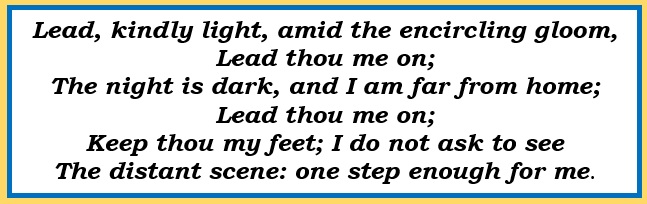
However, it also works well as a title for some thoughts on Candlemas, one of many neglected or forgotten Christian festivals which could do so much to help brighten our year, especially in times like the present, which are both literally and metaphorically dark. Before moving on to that, have a listen to my Great-Great-Great Grandfather’s composition, sung here by Ely Cathedral Choir:

https://open.spotify.com/track/0UjPij2H3426yf1mj5DOpk

So, what of Candlemas? Among the many reasons why I follow and commemorate the life of Jesus of Nazareth is that doing so can give a form and pattern to our necessarily secular lives and provide opportunities for constructive reflection. Candlemas Day could be seen as a landmark in the Christian year, a moment of ending and new beginning. It falls towards the end of winter as we start to see the first signs of spring. Candlemas is a rather forgotten and neglected festival, marking the last day of the Christmas Season, and traditionally the day on which a Christmas Crib is put away, having been left in place when all the other decorations came down on 12th night. In our house, the two cribs stay defiantly in place until February 2nd.

Candlemas commemorates the Presentation of Jesus in the Temple, six weeks after his birth, as told in the Gospel of St Luke. Presentation of a child was - still is - a standard rite of passage for a Jewish child, but the story is told of an old man in the Temple, Simeon, who on seeing the infant Jesus brought for Presentation, declared that he had "seen the Light of the World",  and could now die happy. 
Simeon's words give us the Nunc Dimitis, a familiar part of the traditional Evensong. I personally find these among my favourite words from scripture, replete with meaning and comfort:-

It's easy to see how this recognition of Jesus as the "Light of the World" developed into Candlemas: a festival of light in the depths of winter is an appealing idea that long pre-dates Christianity, so the Church took it over in the same way that Christmas and Easter were "Christianised" versions of earlier festivals. What's surprising is that neither the Church nor the exploitative commercial world has ever made much of Candlemas in the way that happens with Christmas, Easter and various Saints days.

I think that's a shame. If ever there was a time of year when we need a nice little extra festival, it's surely the end of January/start of February. It's famously a depressing time of the year, with "Blue Monday" in mid-January often designated by expert psychologists as the most depressing day of the year. A case of being paid a lot of money for stating the obvious if ever there was one. So surely, we should all jump at the chance to have a little celebration at this gloomy time of the year. A bit of light in the darkness, just as Jesus was, and is, a shining light of goodness in an often dark and evil world.

In recent years, the church has adopted Christingle as a festival of light, but rather unwisely Christingle gets crammed into Advent and so gets rather caught up in the pre-Christmas busy-ness. Caught between the church's unwillingness to sing carols and celebrate during the restrained and dignified season of Advent, and a desire to anticipate the coming of the Light of the World, Christingle seems to me to be rather an incongruous intrusion in Advent, which deserves better.

So how about we start celebrating Candlemas a bit more, with or without the Christian overtones? A nice, low-key affirmation of light in the darkness of February, with perhaps a wholesome winter casserole at a candlelit table. How about a drink to celebrate the end of dry January? And as for music, well the playlist, both sacred and secular, is wonderful: Love Shine a light, Shine, Candle in the Wind, If I can Dream, Blinded by the Light, Ray of Light, any Nunc Dimitis, Lead Kindly Light, Christ is the World's true Light - even Shine Jesus Shine if you really must. There's a playlist at the bottom of this post.

It's not an original idea to mark Candlemas. It's a day steeped in folklore, derived from the idea that the end of winter may, or may not, be in sight. The Americans call it Groundhog Day - when this animal emerges from its burrow after hibernation and goes back in if it sees its own shadow - this recognises the not unreasonable idea that if the weather is sunny and settled at the start of February, there is every chance that winter will re-appear before spring finally gets going.

The same idea is present in an old English rhyme:

So keep an eye on the weather on February 2nd, and celebrate Candlemas that day, or maybe the weekend before or after. Whether as a Christian wishing to acclaim Jesus as a shining light in an often evil world, like a candle in a darkened room, or just as a welcome relief from the doom and gloom of January and a chance to keep those Easter eggs at bay, it's worth a go. Close the curtains, dim the lights, pour yourself a nice glass of red, light a candle or two, and enjoy the winter whilst looking forward to summer. 

Here's a link to my Candlemas Spotify Playlist:

https://open.spotify.com/playlist/3g8rDP7zof8M8AAgaQsxD1


Tuesday, 17 December 2019

Woman: The Tale of a Wise Woman

There’s a commonly shared piece of visual humour which crops up on social media at this time of the year: an observation that if the new-born baby Jesus and his parents been visited by three wise women, instead of three wise men, they would have offered something more practical than Gold, Frankincense and Myrrh. It appears on images such as these:


Aside from the Mary, women are conspicuous by their absence from the Christmas story, although not from other events in the life of Jesus as related in the Bible. Whoever or whatever we perceive him to be, Jesus of Nazareth clearly held women in high regard, which is more than can be said for the religion espoused by most of his followers over the subsequent 2000 years.

So no wise women at the Nativity, other than in humorous cartoons? Well hang on, take a look at some Nativity scenes and there is indeed another woman in the stable at Bethlehem. I was looking the other day at the beautiful nativity figures used by my own Parish church, St Michael’s Kirkham, Lancashire, England. And there, next to the familiar Holy Family is another, unfamiliar woman:


Who is she? A discreet young woman, carrying what looks like a vessel of water, her head bowed as if to shun the limelight. Such a figure is sometimes depicted on nativity scenes, but not very often. The conventional interpretation is that she is the Innkeeper’s wife - although why not just a (female) innkeeper? There is no reference in the Bible to an innkeeper, and the invention of such a person and a wife probably owes more to the need to create parts for both genders in nativity plays performed by children.

Either way, this woman looks to be doing what women so often do: dealing with the practicalities of life while men make lots of fuss and noise without actually doing anything very useful.

So is this figure the elusive Wise Woman? Well, some have suggested that the Innkeeper’s wife in Nativity scenes is acting as a doula or even a midwife – bringing much-needed practical help, experience, reassurance and water to the cold and draughty stable, having earlier acted as a birth partner to Mary while Joseph fainted in the hay. The word midwife is derived from the old English Mitweib, meaning simply “with woman” (hence the fallacy of trying to change the gender of the word midwife to apply to male practitioners of the role), and the Innkeeper’s wife is certainly fulfilling the need for a female companion to the new mother – in the case of Mary, a young, unmarried, frightened refugee mother, coping with labour and childbirth in unimaginably difficult circumstances.

So perhaps we should refer to this female in the nativity scene as a midwife - but is she a wise woman? Well if we look at the French word for midwife, we can call her both a midwife and a wise woman. Look up the French for a midwife and you’ll see that it's the delightful term sage-femme”. And what does “sage-femme” literally mean? Yes, you’ve guessed it - wise woman.

So there you have it. There may well have been wise men, possibly a whole gang of them (nowhere in the Bible does it say there were three wise men), but they arrived 12 days late and landed the refugee couple with some very nice but frankly rather useless perfume and jewellery. But all along there was a wise woman in the background, quietly helping Mary to recover from an uncomfortable birth and to look after her very important but vulnerable new arrival.

The Wise Woman, far left
We all know that one wise woman can often achieve more than a whole army of not-so-wise men.

I dedicate this tale to some very wise women: my wise wife, my two wise daughters and the many wise women whom I am fortunate to count as dear friends. We’d be lost without you.

And a song title? How about John Lennon's Woman his ode to the folly of men and the wisdom of women, released so poignantly just after his murder 40 years ago.

Thursday, 28 November 2019

It's beginning to look a lot like Christmas

It’s beginning to look a lot like Christmas. You can say that again, albeit you’d be about a month late in saying it. The retail and hospitality trades have been trying to convince us it’s Christmas since early November at least, and in many cases much longer, and by the time we get to next weekend, and into December, our nation will be in full-on festive mode.

Our towns centres are already awash with Christmas lights, as high street traders seek to make the most of the first unrestricted Christmas in three years, and counteract the ever-growing threat of online retailers; our garden centres have all been transformed into “winter wonderlands” since early November, with barely a trace of a plant or a bag of potting compost until you’ve made it through the dazzling displays of lights and baubles and the animated Santas; and the airwaves and playlists will from December 1st, if not before, be dominated by the well-loved works of Slade, Wizzard, The Pogues, Chris Rea, Mariah Carey et al.

There's now a well established yet unofficial convention that December equals Christmas, certainly in terms of decorations and radio playlists - due, I think, to the ubiquity of Advent Calendars, which were relatively rare and chocolate free in my 1960s childhood, then the norm for any household with children since around 1980, but these days used by all ages, often featuring not just chocolates but other edible treats too. 

So for many, December 1st means Christmas has started. And yet…..it isn’t Christmas just because it's December. Christmas starts on December 25th and lasts until January 6th. This past Sunday was Advent Sunday, traditionally the start of a season of preparation and penitence, of restraint and reflection, ahead of the midwinter feast.

An Advent Wreath

Please don’t get me wrong or dismiss me as a religious zealot or killjoy: I love Christmas, not despite but because of its secular tackiness, cheesiness, over-indulgence, and excesses. It’s a treat for all of us at a time of the year which can seem very gloomy, but like all treats, it’s a treat because it’s rare and time-limited. I love Roy Wood’s I wish it could be Christmas every day but that sentiment is so very wrong. If it was always Christmas, it wouldn’t be special, wouldn’t be a treat and wouldn’t be fun.

Now of course in reality, we can’t pretend Christmas isn’t coming. If we are going to enjoy Christmas, we obviously need to celebrate and enjoy many aspects of it in the weeks leading up to it. Buying presents, sending cards, putting up decorations, planning menus, enjoying concerts, events and parties with our friends and colleagues is all part of Christmas, and clearly can’t be done on or after the 25th. 

But do we have to completely overlook the notion of a season of preparation, of Advent? The practice of a period of preparation and abstinence in advance of a joyful feast is common to many other religions, most notably in Islam, with Ramadan followed by Eid. 

Preparation, abstinence and reflection followed by celebration and indulgence is, surely, good for the soul. Or to put it another way, celebration and indulgence without some measure of restraint and context in advance of it is surely not good for the soul.

As a society, we have become very bad at waiting for anything, at any form of delayed gratification, and I plead as guilty as anyone to this. Fast Food, seven-day opening, same-day delivery and Amazon Prime mean that many of us have forgotten what it means to wait for anything. I grew up in the days of “allow 28 days for delivery”, which now seems like a joke. Who would wait 28 days for anything these days?

Yet waiting is, surely, good for us at times. A bit of imposed patience never did anyone any harm. It’s a given of good parenting not to give in to childrens’ every “I want”, not to indulge their every wish, for fear of spoiling them, yet we as adults perhaps don’t practise what we preach. We want it now? We get it tomorrow, thanks to Amazon Prime and some hard-pressed van driver. Convenient, yes, but seldom vital.

Religion has taught us to believe some pretty daft stuff over the years, and to an extent it still does. Christianity has a lot to answer for in terms of its being misused as an excuse for bigotry, prejudice and intolerance. Which is why I have always chosen to follow my religion at a safe distance, shamelessly taking the bits I agree with and rejecting those with which I disagree. And one of the bits of Christianity which I most appreciate is the way it gives a pattern and a rhythm to our lives which is so in tune with the patterns and rhythms of nature itself, if that doesn’t sound too flaky. By hijacking pre-Christian, pagan midwinter celebrations, Christianity taps into our need for some light and cheerfulness, “in the bleak midwinter”, and by encouraging us to wait patiently for the fun and festivity, rather than jumping the gun, it taps into a bit of useful psychology and self-discipline.

So instead of joining Noddy Holder in shouting “It’s Christmassss!” on December 1st, I would suggest that it’s more fun, and better for us, to enjoy Advent for what it is? 

Yes, I have already put up some decorations, but I always start with a few, advent-themed ones - just a few candle bridges in windows, an advent wreath with candles and an advent calendar - but I’ll leave other decorations until later in December. Yes, I will listen to seasonal music, but I’ll start with my Advent Playlist (click those words for the Spotify Link), which contains some simply wonderful and oft-neglected sacred music and hymns, plus, as is my wont, some secular songs that fit the season.

Then when Christmas finally comes, I’ll enjoy all 12 days of it, and I'll be saying "It's Christmas" until January 6th, when much of the secular world will have long since moved on and started eating Creme Eggs.

Wednesday, 5 December 2018

Little Saint Nick: how Christmas got its Santa


6th December is the feast of St Nicholas - or Little Saint Nick as the Beach Boys referred to him in their 1973 festive offering. I wonder how many readers didn’t know that, or had forgotten. It's a festival that, like many, appeals to me as I love special days and seasons. Every month has its particular feel; I enjoy each of the four seasons for their own atmosphere, and above all for the contrast between them.

I take childlike pleasure in the big festivals - family birthdays, Christmas, Easter, Shrove Tuesday, Halloween - as well as many forgotten, neglected or less universally observed days like Epiphany and Candlemas. Follow the links from those words to read my previous posts about the latter two if you haven’t seen them. Moreover, in my long career as a schoolteacher, I enjoyed the traditional landmark events of the academic year like start of term, end of term, Sports Day, Speech Day, Leavers’ Day etc.
Much of our day-to-day home and working life is by necessity routine and repetitive, so days which feel a bit different help to punctuate the year and to give us something to anticipate with excitement then look back on with warmth and affection.
These days, the retail and hospitality industry tries hard to part us from our money by promoting special days like Valentine’s Day, St Patrick’s Day, Mother’s Day and Father’s Day as occasions for buying cards, gifts and enjoying some special food and drink. Some decry the over-commercialisation of festivals, but I have no problem with it: good luck to hard-pressed retailers or pubs trying to get us to mark an occasion with a card, a gift or a drink.
I also find it interesting that as a society, we seem to crave collective events and enjoy celebrating them: the unexpected and refreshing success of the England football team in the World Cup in Russia palpably raised the spirits of a divided nation for a few heady weeks in summer 2018, and the day of the Semi-Final, an ordinary Wednesday, felt like a public holiday, with beer and burger sales booming as millions with only a passing interest in football used the occasion to go on a night out or invite friends round for a party. Likewise, the wedding of Prince Harry and Meghan Markle in May of the same year proved to be a collective celebration in the early summer sunshine, with the kill-joy republicans suddenly going rather quiet as the nation rejoiced in the happiness of a personable couple with a happy knack of seeming connected to ordinary folk yet retaining the dignity and mystique of monarchy. Sadly, two years on, that story appears to have had a less than happy ending.
Yet we in the UK are not very well off for festivals. Despite attempts by some, we English still seem embarrassed by St George’s Day, tainted as it is by the impression that it somehow the province of the Brexiteer generation. I remain very uneasy about it and therefore indifferent to it, not least because the real St George (ethnically Greek by most accounts) had so little connection with our country. The Scots, the Irish, the Welsh, the French, the Americans and many others have no such problem with their own national day.
And unlike our European neighbours, we don’t seem to have been very good at appropriating religious festivals, secularising them and enjoying them, even without any of the belief. The French enjoy public holidays on Catholic feast days like All Saints, Ascension and Pentecost, despite living in a country where religion is constitutionally excluded from public life. A case of not having your cake yet still eating it!
And what about Harvest Festival? Here, it’s marked in churches and primary schools, but nowhere else. But the Americans have combined the notion of giving thanks for food and drink with gratitude for the founding fathers of their nation to create Thanksgiving, a celebration of family life, and which helps keep Christmas where it belongs in December.
At the time of writing, we have reached the time of year when we are being told “it’s Christmas” by everyone from the BBC to Noddy Holder, in a manner which is quite fun but risks having us fed up with Christmas three weeks before the day. Which is where St Nicholas - aka Santa Claus - should be able to help! St Nicholas Day presents a golden opportunity, taken by people in many other countries, to enjoy a little celebration ahead of Christmas.
Having lived in Eastern France for a year in my early 20s, I have ever since celebrated St. Nicholas Day on December 6th. When our children were little, we told them to leave a pair of shoes by the chimney, and in the morning it was filled with a Lindt chocolate Santa or some such. Just a little treat, but a nice way of teaching them the origin of Santa, and a little landmark on the way to Christmas. This custom is widely observed in some cultures.
So who was St. Nicholas?  Many people just know him as Santa Claus. While the modern figure of Santa derives from St. Nick, the real man behind the fictitious Santa was St. Nicholas of Myra. Born in 280 A.D. in Asia Minor, he lost his parents at an early age, but leaving him great wealth when they died. He was known for giving anonymous gifts to help those in need and was eventually made a bishop. He died on December 6th; thus this day is now St. Nicholas Day. He was apparently a generous and kind man, so the association with gift-giving seems obvious. The history of leaving shoes or stockings out for St. Nicholas derives from the story of his leaving small bags of gold for a man and his three daughters. In those days, women had to bring a dowry to a marriage in order to find a good husband. St. Nick heard of a man who had three daughters but could not afford the dowry. Without it, the daughters would most likely enter a life of prostitution instead of being able to marry. According to legend, St. Nick threw three bags of gold through their window at night, saving them from a life at a brothel and creating his reputation as the patron of gift giving.
The feast of St. Nicholas is celebrated around the world in various cultures. In Greece (as well as Albania, Serbia, and Bulgaria), St. Nicholas is celebrated on the eve of his feast day, December 5th. This day is known as Shen’Kolli i Dimnit (Saint Nicholas of Winter). In these cultures, this day is one of fasting. Most people abstain from meat or fast completely or prepare a feast to eat just after midnight.

In Belgium, the Netherlands and parts of eastern France, children leave their shoes or boots in front of the fireplace for St. Nicholas on the evening of December 5th. Often, they include a carrot or a treat for his horses, as legend has it that he arrived with his horses via sleigh or steamboat in these areas. (a tradition which has transferred into the “sherry and mince pie for Santa, carrot for Rudolph idea for Christmas Eve). 
St. Nicholas is said to arrive on December 6th and give children small gifts and chocolates. In the weeks leading up to this day, parents and grandparents tell stories of the legend, including a disturbing but popular addition: the story goes that three children wandered away and got lost, and a butcher lured them into his shop where he killed them and salted them away in a large tub. According to legend, St. Nicholas revived the boys and brought them home to their families. This story earned him his reputation as protector of children in France. The butcher (known as “Père Fouettard,” meaning “Father Whipper”) is imagined to follow St. Nicholas in penance and leave lumps of coal or even whips misbehaving children. In France, statues and paintings often portray this event, showing the saint with children in a barrel.
In Germany and Austria (and some other countries in this region), children leave out a boot for St. Nicholas and receive small toys, coins, or sweets. In these areas, St. Nicholas is commonly depicted as a bishop and is often portrayed on a horse. Like in the French story, a sinister companion accompanies him, in this case the even more terrifying demon-like Krampus. This beast is thought to punish children who misbehave and to capture particularly naughty children in his sack and carry them away to his lair. The Krampus has roots in Germanic folklore and its influence has spread to Austria, southern Bavaria, South Tyrol, northern Friuli, Hungary, Slovenia, the Czech Republic, the Slovak Republic, and Croatia.

So St Nicholas is a well-known legendary figure in many countries, and the connections to Santa Claus - gift giving, naughty or nice etc. – are clear, although the timing of his festival is coincidentally near Christmas, rather than because of the Santa connection.
However, the Christmas connections present us with a nice “extra” feast to help us get through the long, excited wait for Christmas. So put your shoes out and see what Little Saint Nick puts in them!

Thursday, 4 January 2018

Gold

Happy Christmas! It’s still OK to say that. I first wrote this post on January 4th 2018, and am revising it on January 5th 2022, so by my reckoning that’s the 12th day of Christmas, and those twelve drummers are busy drumming as I write. My decorations came down today, my tree is still lit and will remain so until Epiphany, which is tomorrow January 6th.


Most years, my family and I host an Epiphany Party at our home at around this time, as a fundraiser for a community organisation of which I am Chairman (my town’s Twinning Association, which overseas our flourishing links with two similar partner towns in France and Germany.) Our activities are entirely self-funded, so we hold fundraising events that enable us to offer hospitality to visitors from our partner towns. We did this a few years ago as an experiment, and it proved to be so popular that people asked for it to be become a regular event, and we were happy to oblige. This year, however, it is not taking place, for obvious reasons.

Our Epiphany Party table, centred on the Galette, in 2018 

However, we shall still be celebrating Epiphany even without this event, and it seems to me a crying shame that we neglect this opportunity to prolong the fun of Christmas into January – as many other countries, not least our European neighbours do. In our house, the Wise Men "arrive" at the stable on the night of the 5th, and stay there until Candlemas (February 2nd), as tradition dictates.

These Wise Men don't rush in

Epiphany commemorates the arrival to visit the baby Jesus of the Wise Men (often referred to as the Three Kings, even though there is no reference in the Bible to there being three of them, or to their being Kings). But of course the word Epiphany also carries a more general, secular meaning of "a moment of sudden and great revelation or realisation". 

The story of the Wise Men bringing gifts - Gold, Frankincense and Myrrh - lies behind the tradition of exchanging presents at Christmas. In my house, in a tradition inherited from my late parents, we mark the last day of Christmas by exchanging one last present (a small symbolic gift), and take the tree down, but we have also adopted the French tradition of the Galette des Rois, whereby a cake is served, containing a charm, the recipient of which is named “King” for the day and is crowned with a paper crown and allowed to order the rest of the family around for a bit. When our children were little, we used to ensure that one of them got the charm, thereby giving them the right to turn the tables for a bit by requiring us to do the washing up or some other task. Further details about how Epiphany is celebrated in other countries are available here:-


I find it sad and surprising that the retail and commercial trade doesn’t make any attempt to recognise Epiphany here in the UK. Shops jump straight from Christmas to Easter, with Creme eggs on sale from Boxing Day onwards, whilst card shops jump straight from Christmas to Valentine’s Day. I've already seen Creme Eggs and Valentines cards this year. The retail trade seems only too keen to seize on somewhat contrived and rootless dates like Black Friday, yet misses a trick in not acknowledging festivals like Epiphany, St Nicholas Day (December 6th) or Candlemas Day (February 2nd). I wrote about Candlemas in a previous post here.

Epiphany gives the perfect opportunity for one final celebration of Christmas, a moment of fun as an antidote to the dreariness of back-to-work week at the start of January. 

Why don't more families make a Galette des Rois and see who gets to be “King” for the day? And enjoy another Christmas drink while they’re at it? There's little enough fun in the coming weeks. There are numerous recipes for the galette on the internet, such as this one:-


The Epiphany Galette - complete with Crown

But you could always just make - or buy - any sort of cake according to tastes.

And as for so many festivals, there’s a wealth of hidden musical treasure to accompany the day. Here’s my selection of traditional sacred epiphany hymns and music seasoned with some secular songs with Epiphany meaning or lyrics. Who needs an excuse to listen to Spandau Ballet's iconic 80s classic Gold, a fitting title for this post?


Happy Christmas for now, then Happy Epiphany on the 6th!

Friday, 23 December 2016

A Wombling Merry Christmas: an appreciation of Mike Batt

Among the Christmas hits that dominate the airwaves and form the soundtrack to any visit to a supermarket, garden centre or restaurant from mid-November onwards, one of the less commonly heard is Wombling Merry Christmas, which was a Top Ten hit in 1974, riding that year’s wave of popularity of the furry eco-warriors and their pre-news TV show. At one level, it’s just another identikit Christmas song of the sort that has been churned out over the years: a catchy tune, with cliché lyrics overlaid with sleigh bells. And of course in 1974, a 7” single was a perfect stocking filler for children who had fallen for the lovable litter-pickers and their music. It couldn’t fail at the time, but is now too often overlooked.

But listen again, or to any of those songs performed by a band of men dressed in furry costumes, and there’s a lot more to it than just a novelty song. Yes, it’s got all the Christmas clichés, but there’s more than a touch of class about the melodic progression, the orchestration and the production. It bears the unmistakable hallmark of the versatile musician Mike Batt, who wrote, produced and sang all those Wombling songs and a whole lot more besides. He’s one of those musicians whose versatility and breadth of musical skills mean that he risks being overlooked or regarded as a lightweight: not cool enough to be a respected rock musician, not serious enough to be a respected classical musician. This is a pity in my opinion, and his work over five decades merits more recognition than he gets. A bit like Wombling Merry Christmas.

Take those Womble songs for a start. Batt’s ability to write and produce songs in any style shines through: from the theme of the TV series came their debut single, The Wombling Song with one of the best melodic introductions I know, played on the French horn, hardly a staple instrument of pop and rock. He's fond of featuring more unusual instruments in his songs, a bit like another of my heroes, Roy Wood.

Batt followed that initial success up by cleverly exploiting the Womble craze while it lasted, with a series of pastiches of musical styles. Remember You’re a Womble with its violin hook, is a country square dance; Minuetto Allegretto dares to rip off Mozart of all people, while Wombling White Tie and Tails cleverly evokes the Hollywood of Fred Astaire and Ginger Rodgers. And of course there’s the already mentioned Christmas song. Novelty songs all of them, but a clear indication that their writer/ producer knows his music across a very broad range of genres.

Since that lot, we haven’t actually heard Batt much. He released one single in his own name, the theme song for a mid-seventies TV series Summertime Special - it's another “annoyingly good” song called Summertime City, but then concentrated on writing, arranging and producing. If you know your 70’s and 80’s pop, you’ll be familiar with all the songs, but you may be surprised to learn of Mike Batt’s involvement in at least some of them. In 1975, he turned a traditional folk song, All Around my Hat, into a big hit for folk band Steeleye Span, then in 1979 he wrote and produced Bright Eyes for the film Watership Down, giving Art Garfunkel his biggest solo success. Bright Eyes is the archetypal Mike Batt song, characterised by clever chord progressions that somehow tug at the heart strings and clever use of that most bitter-sweet sounding of instruments, the oboe. It always reminds me of one of my favourite French songs, La Montagne by Jean Ferrat, an achingly sad eulogy for the rural way of life lost in the late rush to urbanisation in post-war France. You don’t need to understand French to get this song, and even if like me you do speak French, you won’t understand all the lyrics, but you’ll get the feel of it. Like Bright Eyes, it just sounds sad and wistful.

Mike Batt certainly knows how to write a sad song. If you want to wallow in your misery after a failed relationship, try any one of these three Mike Batt compositions from the early eighties, all written for established artists: Please Don’t Fall in Love by Cliff Richard, A Winter’s Tale by David Essex and I Feel like Buddy Holly by Alvin Stardust. They won’t cheer you up, but they’ll put your sadness into music, never mind words, and assure you that however unhappy you are, someone else has been there as well and made a damn good tune out of it.

Talking of good tunes, you probably didn’t know that the main theme from Phantom of the Opera is in part a Mike Batt song. But it is, and in this case it was the lyrics, not the tune, that he co-wrote. And he also produced the Steve Harley/ Sarah Brightman version of that song, which served as such an effective trailer for the show.

Then there’s Katie Melua. Although her success is often rightly credited in large part to the late Terry Wogan’s championing of her work on his breakfast show, it was Batt who wrote much of, and produced her debut album Call off the Search. And the break-out single, still her best known song, Closest Thing to Crazy, is archetypal Mike Batt. It’s a sultry, jazzy song that sounded like a years-old standard as soon as it came out. One of those songs that you think you know the first time you hear it.


Perhaps that’s the thing about Mike Batt. In some ways, his music is a bit derivative, but what’s wrong with that if it’s done so well? He’s so good at writing in so many styles that he risks being seen as a jack of all musical trades, lacking in specialist talent or originality. He certainly deserves to be regarded as more than just “the man behind the Wombles”, but those songs alone deserve a lot of credit. I wish you all a Wombling Merry Christmas.

Saturday, 26 November 2016

It Came Upon The Midnight Clear

We have reached that time of year when Christmas music, be it sacred or secular, assaults our senses. The canon of secular songs forces its way into our consciousness from early November onwards whether we like it or not, and even though many of those songs are on our guilty pleasures list, it is difficult to avoid tiring of them before Advent has started, let alone Christmas. I try in vain to avoid them until well into December, yet have to admit to a frisson of childlike excitement when I hear Fairytale of New York or I Wish it could be Christmas every Day, to name but two, for the first time each year. And when Perry Como sings It’s beginning to look a lot like Christmas I have to agree with him.

Fortunately, sacred Christmas music is a little easier to avoid, in that it is less commonly heard in supermarkets and garden centres, but one is nevertheless likely to have sung O Come All Ye Faithful several times before we get anywhere near the “Happy Morning” on which we can sing “Yea, Lord We Greet Thee”. These days, the John Rutter standards are also likely to have become over-familiar by mid-December if you are involved in a church, school or choir, and I must even admit to a certain weariness with the standards such as Hark the Herald, While Shepherds Watched, Silent Night and even Away in a Manger.

Yet there are a number of wonderful Christmas Carols which are neglected, and would be unlikely to feature in the answer of any non-churchgoer asked to name their Top Five Christmas Carols. I would cite as examples See Amid the Winter’s Snow, Christians Awake (which can really only be sung on Christmas Day, and so in my memories of childhood carries a unique feel of excited Christmas Morning services) and above all, It Came Upon the Midnight Clear.

If you know a lot about me, you’ll now see where this post is heading: It Came upon the Midnight Clear is indeed a Unitarian carol, the only one to have reached the mainstream, written by Edmund Hamilton Sears (1810-1876), an American Unitarian Preacher and first heard in 1849. It is, and always has been, my favourite Christmas hymn. I inherited my love of it from my late father, unitarian minister and liberal theologian Revd Dr Arthur Long. We sang it at his funeral, just before Christmas 2006. To me, no hymn better evokes the message of Christmas, yet it is not exactly cheerful or festive, and some would say not even Christian. All the better for it, in my opinion. I am never sure how well known it is in our secular age, but I think any churchgoer will know it. For those who don’t, here it is, performed by the peerless Choir of King's College Cambridge in 2006:-


The first verse seems to be heading in a relatively orthodox direction, evoking traditional images of a still and silent night interrupted by the song of the Angels:

It came upon the midnight clear,
That glorious song of old,
From angels bending near the earth
To touch their harps of gold!
Peace on the earth, goodwill to men,
From heaven's all gracious King!
The world in solemn stillness lay
To hear the angels sing.

Yet Sears was writing at a time when he was preoccupied by events in a turbulent world, and with threatened revolutionary rumblings in Europe and the United States' war with Mexico on his mind, he portrayed the world in a later verse as dark, full of "sin and strife," and not hearing the Christmas message:

Yet with the woes of sin and strife
The world has suffered long;
Beneath the angel-strain have rolled
Two thousand years of wrong;
And man, at war with man, hears not
The love song which they bring:
O hush the noise, ye men of strife,
And hear the angels sing.

So here we have the Christmas message of Peace on Earth, Goodwill to all Men well and truly deflated. At this point, we are in the same territory as Greg Lake’s much-loved anti-Christmas song, I Believe in Father Christmas, which brilliantly debunks the peace and goodwill message. It Came upon the Midnight Clear could indeed be construed at this point as an anti-Christmas hymn. It has in the past been criticized for not even mentioning the Christ-child. British scholar Erik Routley wrote that "the hymn is little more than an ethical song, extolling the worth and splendour of peace among men."

So not very Christian then? Well perhaps not. Yet it is most ironic to learn that Edmund Sears, author of this "humanist" carol, was in fact a very much a Unitarian Christian. "The word God may be uttered without emotion," he told his congregation, "while the word Jesus opens the heart, and touches the place of tears." For Sears, Christ was the incarnation of the Divine Word, and a mediator who alone could bridge "the awful gulf between God and man." In other words, he saw Jesus Christ as the metaphorical, rather than literal, son of God. Pretty orthodox Unitarian Christianity: God reaching down to humanity, through his metaphorical son as a prophet, but his "peace" contingent upon a human response rather than by divine intervention.

Although as a Unitarian, Sears rejected the doctrine of original sin which is so central to mainstream Christianity, he saw all human groups and individuals as having the potential for evil. At the same time he wrote of people as fashioned in the image of God and blessed with varying degrees of development in their spiritual nature. So there is always the prospect of redemption, of good overcoming evil, leaving room for optimism and an uplifting conclusion to his hymn about Christmas which has become his only legacy of significance.

So for me, the most appealing aspect of this carol (other than Arthur Sullivan’s beautiful melody) is the optimism of the last verse, which never fails to lift my spirits in the face of so much that’s wrong in the world:

For lo! the days are hastening on,
By prophet bards foretold,
When, with the ever-circling years,
Comes round the Age of Gold;
When peace shall over all the earth
Its ancient splendours fling,
And the whole world give back the song
Which now the angels sing.

Naïve optimism? Arguably so at the end of 2016, a year in which we have so often been reminded of mankind’s capacity for stupidity at best, downright evil at worst. Yet if we can’t have hope at Christmas, seeing the coming of the Christ-Child as a symbol of light and warmth at the darkest and coldest time of the year, then truly we have given up on life.


Thursday, 21 January 2016

Love Shine a Light: Candlemas

Love Shine a Light in every Corner. Time for another religious post. This is a post about one of those little-known and neglected festivals - Candlemas - that could do so much to help brighten our year, especially in times like the present, which are both literally and metaphorically dark. I hope that I can help those who are sceptical or dismissive of religion a chance to see that following and  commemorating the life of Jesus of Nazareth can give a form and pattern to our secular lives and provide opportunities for constructive reflection.

Did you know it's still Christmas? Well, to be accurate, it's still Epiphany, which is a season lasting from January 6th until February 2nd - Candlemas Day.

Candlemas is a rather forgotten festival, marking the last day of the Christmas Season, and traditionally the day on which a Christmas Crib is put away, having been left in place when all the other decorations came down on 12th night. In our house, the two cribs stay defiantly in place until February 2nd.

Candlemas Day commemorates the Presentation of Jesus in the Temple, six weeks after his birth, as told in the gospel of St Luke.

Holbein's Presentation of Christ
Presentation of a child was - still is - a standard rite of passage for a Jewish child, but the story is told of an old man in the Temple, Simeon, who on seeing the infant Jesus brought for Presentation, declared that he had "seen the Light of the World",  and could now die happy. His words give us the Nunc Dimitis, a familiar part of the traditional Evensong.

"LORD, now lettest Thou Thy servant depart in peace; according to Thy word: for mine eyes have seen Thy salvation, which Thou hast prepared before the face of all people: to be a light to lighten the gentiles and to be the glory of Thy people Israel"

It's easy to see how this recognition of Jesus as the "Light of the World" developed into Candlemas: a festival of light in the depths of winter is an appealing idea that long pre-dates Christianity, so the Church took it over in the same way that Christmas and Easter were "christianised" versions of earlier festivals. What's surprising is that neither the Church nor the exploitative commercial world has ever made much of Candlemas in the way that happens with Christmas, Easter and various Saints days.

I think that's a shame. If ever there was a time of year when we need a nice little extra festival, it's surely the end of January/start of February. It's famously a depressing time of the year, with "Blue Monday" in mid-January  officially designated the most depressing day of the year. So surely, we should jump at the chance to have a little celebration at this gloomy time of the year. A bit of light in the darkness, just as Jesus was, and is, a shining light of goodness in an often dark and evil world.

In recent years, the church has adopted Christingle as a festival of light, but rather unwisely Christingle gets crammed into Advent and so gets rather caught up in the pre-Christmas busy-ness. Caught between the church's unwillingness to sing carols and celebrate during the restrained and dignified season of Advent, and a desire to anticipate the coming of the Light of the World, Christingle seems to my traditionalist mind  to be rather an incongruous intrusion in Advent.

So how about we start celebrating Candlemas a bit more? A nice, low-key affirmation of light in the darkness of February, with perhaps a wholesome winter casserole at a  candlelit table. How about a drink to celebrate the end of dry January? And as for music, well the playlist, both sacred and secular, is wonderful: Love Shine a light, Shine, Candle in the Wind, If I can Dream, Blinded by the Light, Ray of Light, any Nunc Dimitis, Lead Kindly Light, Christ is the World's true Light - even Shine Jesus Shine if you really must. There's a playlist at the bottom of this post.

It's not an original idea to mark Candlemas. It's a day steeped in folklore, derived from the idea that the end of winter may, or may not, be in sight. The Americans call it Groundhog Day - when this animal emerges from its burrow after hibernation and goes back in if it sees its own shadow - and this recognises the not unreasonable idea that if the weather is sunny and settled at the start of February,  there is every chance that winter will re-appear before Spring finally gets going. The same idea is present in an old English rhyme:

"If Candlemas Day be bright and fair,
then half the winter's to come or mair;

If Candlemas Day be dark and foul, 
then half the winter was over at Yule"

So let's celebrate Candlemas. Whether as a Christian wishing to acclaim Jesus as a shining light in an often evil world, like a candle in a darkened room, or just as a welcome relief from the doom and gloom of January and a chance to keep those Easter eggs at bay, it's worth a go.


Close the curtains, dim the lights, pour yourself a nice glass of red, light a candle or two, and enjoy the winter whilst looking forward to summer. Here's a Candlemas Spotify Playlist:

Sunday, 20 December 2015

Roy Wood isn't just for Christmas - he's a musical genius for all seasons

I wish it could be Christmas every day. Roy Wood is pretty ubiquitous at this time of the year, every year. He's still active as a musician, and appeared on the 2014 Christmas Celebrity "Pointless", closing the show with a great live rendition of his 1973 festive classic. I was thrilled last Christmas when he even "liked" one of my tweets: I'm enough of a starry-eyed big kid to still get excited if a celebrity interacts with me on Twitter.


But in fact, I didn't need reminding of Roy Wood. I have admired him as a musical genius since 1968 when I discovered his band The Move. Sometimes an established band comes up with a song that moves them to another level, and for me the Move's 1969 Number One, Blackberry Way, written by Roy Wood, was one such song. Often said to be inspired by the Beatles' brilliant Penny Lane, both songs have wonderful observational lyrics allied to unusual key changes within an original and unpredictable melody. Yet they are strikingly different songs: Penny Lane's upbeat major key changes evoke sunny skies and the optimism of suburbia in the swinging 60's, whereas Blackberry Way's bleak minor key changes evoke a dull winter day in a chilly park hit by spending cuts. Never was a January Number One so well-timed. If it doesn't sound daft, Blackberry Way is the most upliftingly depressing song ever written.

But look at the Move's back catalogue and it's full of pop genius. Flowers in the Rain was famously the first song played on Radio One in 1967, a dose of Flower Power at the end of the Summer of Love; Fire Brigade was lyrically innovative and brilliantly produced; Curly gave a foretaste of Wood's use of unusual instrumentation with its use of the recorder; and California Man is as good a piece of Rock and Roll as anything from the 50's.

Roy Wood's influence grew as the Move evolved and others left, but it was only when he left to form Wizzard and to produce solo work that his full genius as a composer, lyricist, arranger, producer and multi-instrumentalist was fully revealed. In late 1972, Ball Park Incident displayed for the first time Wood's love of a "big" sound created by multiple instrumentation with a prominent use of brass, especially saxophones, and his distinctively syncopated turn of melodic phrase. 1973 was Wizzard's annus mirabilis, and their early summer Number One See my Baby Jive feels as fresh today as it did when that unmistakable opening drum burst first hit the airwaves. They repeated the trick with the often forgotten Angel Fingers, then ended the year with the Christmas song which has given him immortality in the English-speaking world. Many music critics have in recent years drawn attention to the very obvious debt owed by Abba to Roy Wood's Wizzard: listen to their Gold standards Waterloo and Dancing Queen and the influence is hard not to recognise.

It's easy to forget how blessed we were with proper Christmas hits back in the 70's and 80's. Wizzard had to fight it out with Slade's Merry Christmas Everybody for the Christmas No 1 in 1973,  the year of the 3 day week, 10:30 TV shutdown and football without floodlights. And in the charts that same month were Elton John's Step into Christmas, Steeleye Span's Gaudete (one of only two UK chart hits in Latin) and the Beach Boys' re-released Little Saint Nick, all now staple ingredients of every Now That's What I call Christmas compilation. Slade's song is often regarded - rightly - as the best expression of the tipsy frivolity that is our modern secular Christmas, but Wizzard's song is in many ways the perfect expression of a child's take on Christmas, yet written and performed by a slightly scary-looking man with a multicoloured beard wearing tartan trousers. A kind of hippy-trippy Santa if you like. Musically, it's a pastiche of that year's two other Number One hits he had written and performed, but why not? That Spectoresque  saxophone-driven wall of sound, anarchic-sounding yet carefully crafted, provided the perfect antidote to a gloomy year in the outside world, as Ted Heath's ailing Tory government grappled with enemies without - OPEC, and within - the NUM.

Roy Wood was a very busy man in 1973. As well as Wizzard, he had just left the newly formed ELO, leaving it in the capable hands of fellow Brummie Jeff Lynne, and was also writing and performing as a solo artist. His album Boulders, also released in 1973, but recorded four years earlier, is about as solo as a solo album gets: he wrote the songs, played all the instruments and even drew the artwork for the cover. There was only one minor hit single, Dear Elaine, but that alone sums up all that is clever and original about the album in particular and Wood's work in general. It's one of the saddest lost-love songs I know, as his plaintive vocal pleads for forgiveness backed by mandolin and French horn, both played by him of course. Contrast that with When Gran'ma plays the Banjo, a frivolous hillbilly singalong song, and you realise what a gloriously schizophrenic album it is.

He carried on in the same vein in the following years with more solo work: Forever sounds like something from the early 60's by someone like  Neil Sedaka, whilst minor hits like Going Down the Road and Oh What a Shame were also musically and lyrically original tributes to other styles. Early in 1975, Wizzard had one last chart hurrah with Are You Ready to Rock which reminds us once again that he can write and perform pure rock and roll as well as any of the greats.

I hope that readers of this post who only knew "that" Christmas song will agree that Roy Wood has given us far, far more than just one song. On Twitter, he is known as Dr Roy Wood, thanks to his honorary degree from the University of Derby, an entirely fitting honour. He deserves to be better known for the full scope of his work, as well as his most successful song.

Note: all bits of text in colour are links to relevant Spotify or Wikipedia pages.

The Way We Were

“Can it be that it was all so simple then? Or has time re-written every line? And if we had the chance to do it all again, tell me... Would ...